AI Changes Behaviour
AI changes more than products. It changes behaviour.
One of the biggest misconceptions around AI is that its impact is primarily technical. Faster workflows, smarter automation, better outputs. In reality, the biggest shift often happens somewhere else entirely: in how people work, make decisions, and relate to responsibility.
Because the moment AI starts producing useful results, behaviour changes. Teams begin to trust faster and decisions get made with less friction. Processes that previously required discussion, validation, or second opinions suddenly feel "good enough" to move forward. Not because people stop caring, but because AI creates the impression of confidence. The output looks structured, logical, and complete, which makes it easy to accept without questioning what sits behind it.
When confidence scales faster than understanding
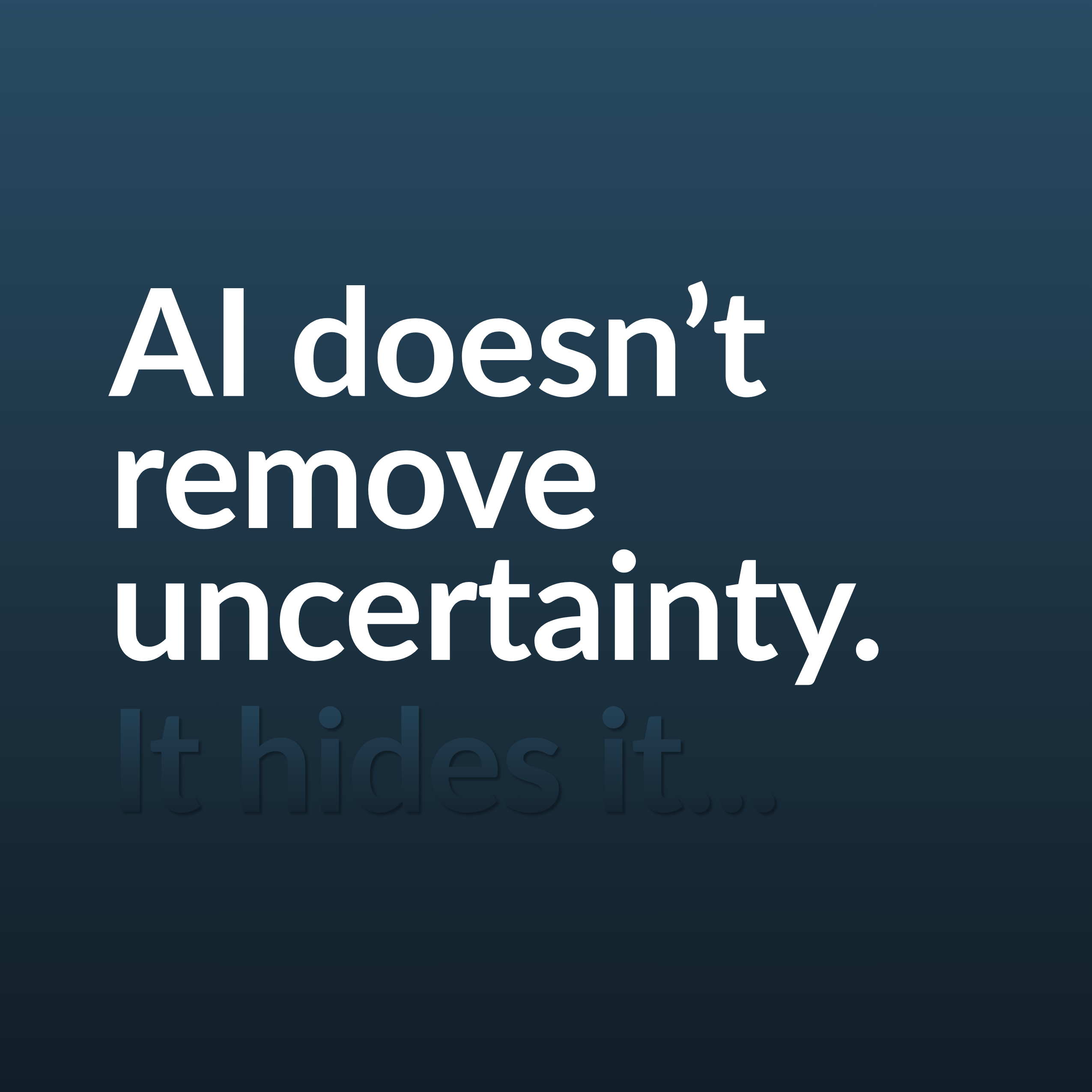
In traditional product development, limitations are usually visible. If something is incomplete, unstable, or unclear, teams notice it quickly. AI changes that dynamic and it lowers the visibility of uncertainty. A feature can appear production-ready long before the underlying logic, data quality, or edge cases have been fully understood. As a result, organisations risk scaling confidence faster than understanding.
This is where long-term problems begin to surface. Not because the technology itself is failing, but because the organisation starts adapting its behaviour around assumptions that have not been properly validated. Over time, that affects more than the product. It affects decision-making, ownership, prioritisation, and ultimately trust.
Building systems people can rely on
At MPWRD, this is why AI is never treated as a standalone layer or isolated feature. It becomes part of a broader product and operational structure where technology, people, and processes need to work together over time. Building sustainable AI-driven products requires more than technical implementation. It requires clear ownership, defined decision paths, and systems that make it possible to understand why something works, not just that it appears to.
That is especially important as products scale. Because once AI becomes embedded into workflows and business-critical decisions, reliability is no longer just a technical requirement. It becomes an organisational one.
What holds up over time
Across this series, we have explored how AI changes the way products are built. But the deeper shift is how it changes the way organisations operate. AI accelerates execution and it accelerates iteration. But it also accelerates assumptions, behaviours, and decisions, both good and bad.
The companies that succeed long term will not be the ones using the most AI. They will be the ones building organisations that know how to challenge it, validate it, and take responsibility for it as complexity grows. Because in the end, sustainable AI is not about automation alone. It is about building systems, teams, and ways of working that people can continue to trust over time.
Looking to build AI solutions that scale beyond the prototype stage? Let's talk!
“The companies that succeed long term will be the ones building organisations that know how to challenge AI, validate it, and take responsibility for it.”